The Hidden Cost of Slow Due Diligence: How Speed Impacts Deal Outcomes
Speed in due diligence isn't just about convenience — it directly impacts deal pricing, competitive positioning, and post-acquisition value creation.

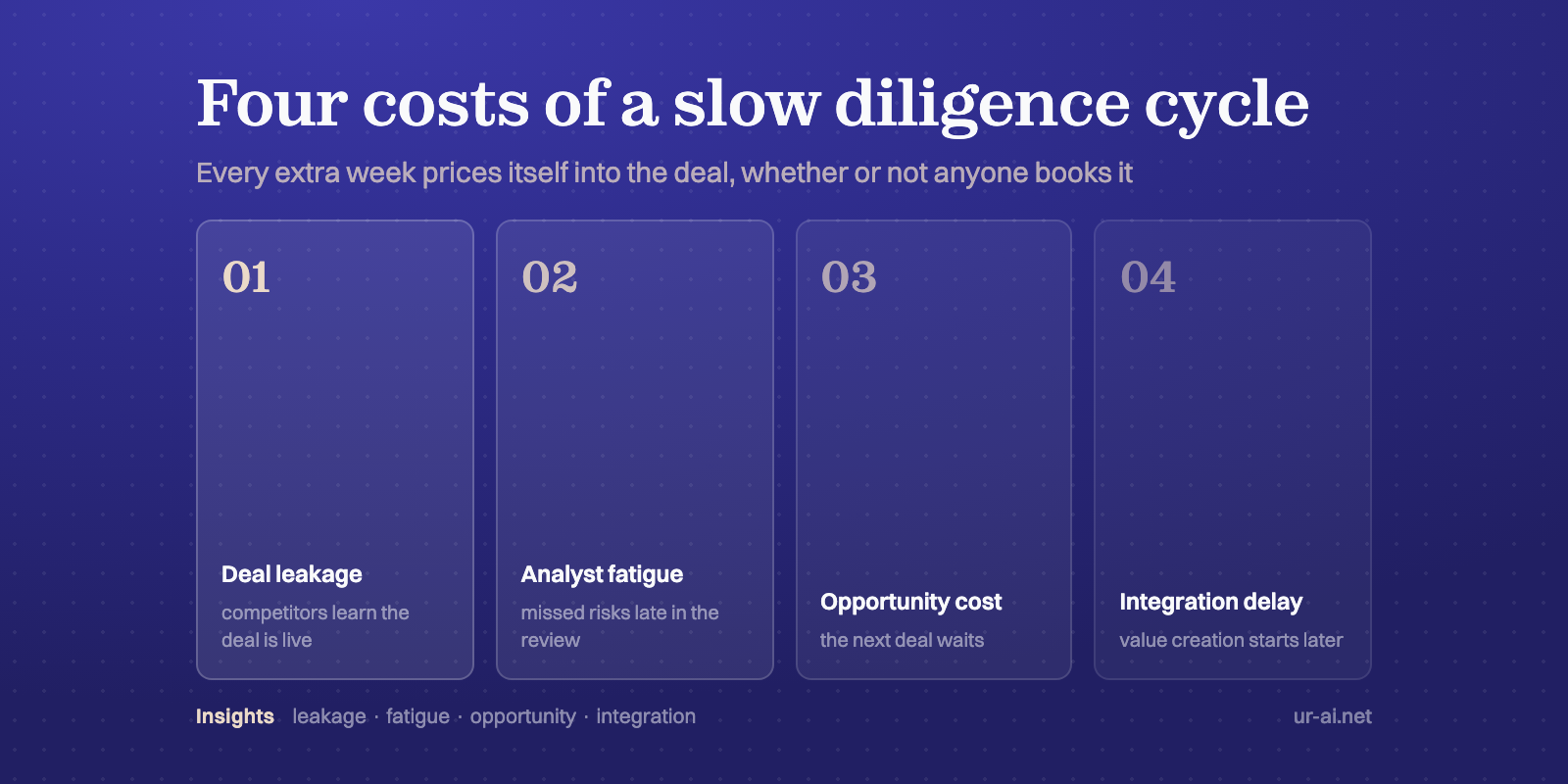
Slow due diligence costs deal teams far more than time. It causes deal leakage through shifting market conditions, missed risks from analyst fatigue, opportunity costs from tied-up resources, and post-close integration delays. Research analyzing over 900 global transactions found that the average due diligence period has grown 64% over the past decade — and that efficiently timed processes correlate with lower acquisition premiums and better post-close returns.
In competitive auction processes, the fastest bidder doesn't always win — but the slowest one almost always loses. Due diligence speed has become a strategic differentiator in M&A, yet most firms still operate with processes designed for a world where "fast" meant four weeks instead of six.
The Four Hidden Costs of Slow Due Diligence
1. Deal Leakage
Every additional week in due diligence increases the probability that market conditions shift, competing bidders emerge, or the seller's expectations change. A study by SS&C Intralinks and Bayes Business School analyzing over 900 global M&A transactions found that the average due diligence period has grown 64% over the past decade — from 124 days to 203 days. Deals with efficiently timed due diligence closed with a lower average acquisition premium (22%) and delivered 4% higher 12-month shareholder returns compared to drawn-out processes.
2. Analyst Fatigue and Missed Risks
When teams are rushing to meet deadlines, they triage. Low-priority documents get skimmed or skipped entirely. But risks don't always hide in the obvious places — a material liability buried in an amendment to a subsidiary's vendor contract can easily be missed when the team is racing through thousands of files.
3. Opportunity Cost
Every senior analyst and associate locked into a multi-week due diligence engagement is unavailable for other deals. For PE firms and advisors running multiple processes simultaneously, slow diligence creates a capacity bottleneck that limits deal flow.
4. Post-Close Integration Delays
Poor or incomplete due diligence doesn't just delay the deal — it delays everything that comes after. Integration teams that receive vague or uncited diligence reports spend weeks re-analyzing issues that should have been resolved pre-close.
Speed Without Sacrifice
The solution isn't to cut corners. It's to eliminate the mechanical work — the reading, summarizing, cross-referencing, and formatting — that consumes the majority of analyst time while contributing relatively little to the actual investment judgment. AI handles the volume; humans handle the judgment. The result is due diligence that's both faster and more thorough.
Specter users report completing initial data room analysis in hours instead of weeks, with every finding fully cited and verifiable. The time saved goes back to what matters most: thinking critically about the deal.
Frequently Asked Questions
How does slow due diligence affect deal outcomes?
Slow due diligence affects deal outcomes in four ways: deal leakage (increased risk of price changes and competing bids), analyst fatigue leading to missed risks, opportunity cost from tying up senior resources, and post-close integration delays from incomplete analysis.
How much faster can AI make due diligence?
Specter can compress initial data room analysis from weeks to hours. Users report completing first-pass analysis of 5,000+ documents in minutes, with every finding fully cited and verifiable. The total time savings depend on deal complexity and team size.