Why Traditional Due Diligence Is Broken — And What Comes Next
Deal teams spend weeks buried in data rooms, producing reports riddled with human error. The industry is overdue for a fundamental rethink of how due diligence works.

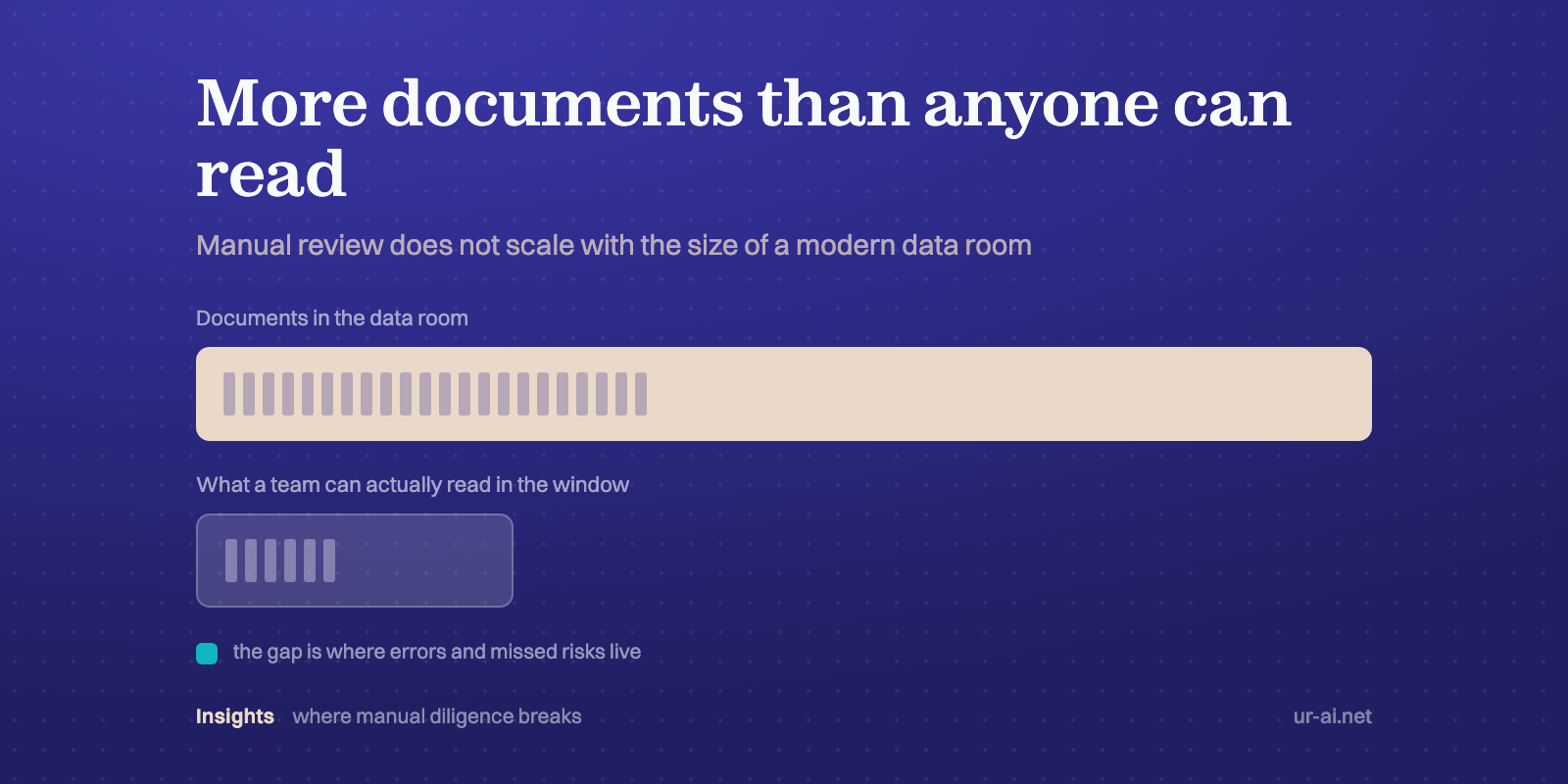
Traditional due diligence is broken. It is slow, error-prone, and structurally incapable of keeping pace with modern deal timelines. A typical deal demands 190+ hours of analyst time per data room, runs 3 to 12 months end-to-end, and costs $100K to $2M+ in professional fees — yet still misses critical risks due to human fatigue and inconsistency.
Every M&A professional has lived the same nightmare. A new deal lands on your desk with 5,000 documents in the data room and a two-week deadline. You assemble a team of analysts, divide the files, and begin the manual slog of reading, summarizing, and cross-referencing. By the time the first draft of your report is done, the deal dynamics have already shifted.
The Numbers Tell the Story
KPMG's 2025 M&A Deal Market Study found that 41% of dealmakers cite completing due diligence as a top obstacle to closing — making it one of the most commonly reported bottlenecks in deal execution. Analysts routinely run 100+ hour weeks during active diligence periods, and the end-to-end process stretches 3 to 12 months for a typical transaction.
The cost isn't just financial. Bain & Company found that 60% of executives identify poor due diligence as the root cause of deal failure — not market conditions, valuation, or integration. The deal is won or lost in the data room. And with over 40% of due diligence missing key risks entirely, the margin for error is smaller than most teams realize.
Sources
Where Manual Processes Fail
- Inconsistency — Different analysts interpret the same contract clauses differently, leading to gaps and contradictions in the final report.
- Citation gaps — Findings often lack precise source references, making it impossible to verify claims without re-reading the original documents.
- Knowledge silos — Insights discovered by one team member may never reach the rest of the team, especially under time pressure.
- Fatigue-driven errors — After reviewing the 500th document, attention to detail inevitably drops. Critical risks hide in the documents no one had energy left to read carefully.
What Comes Next
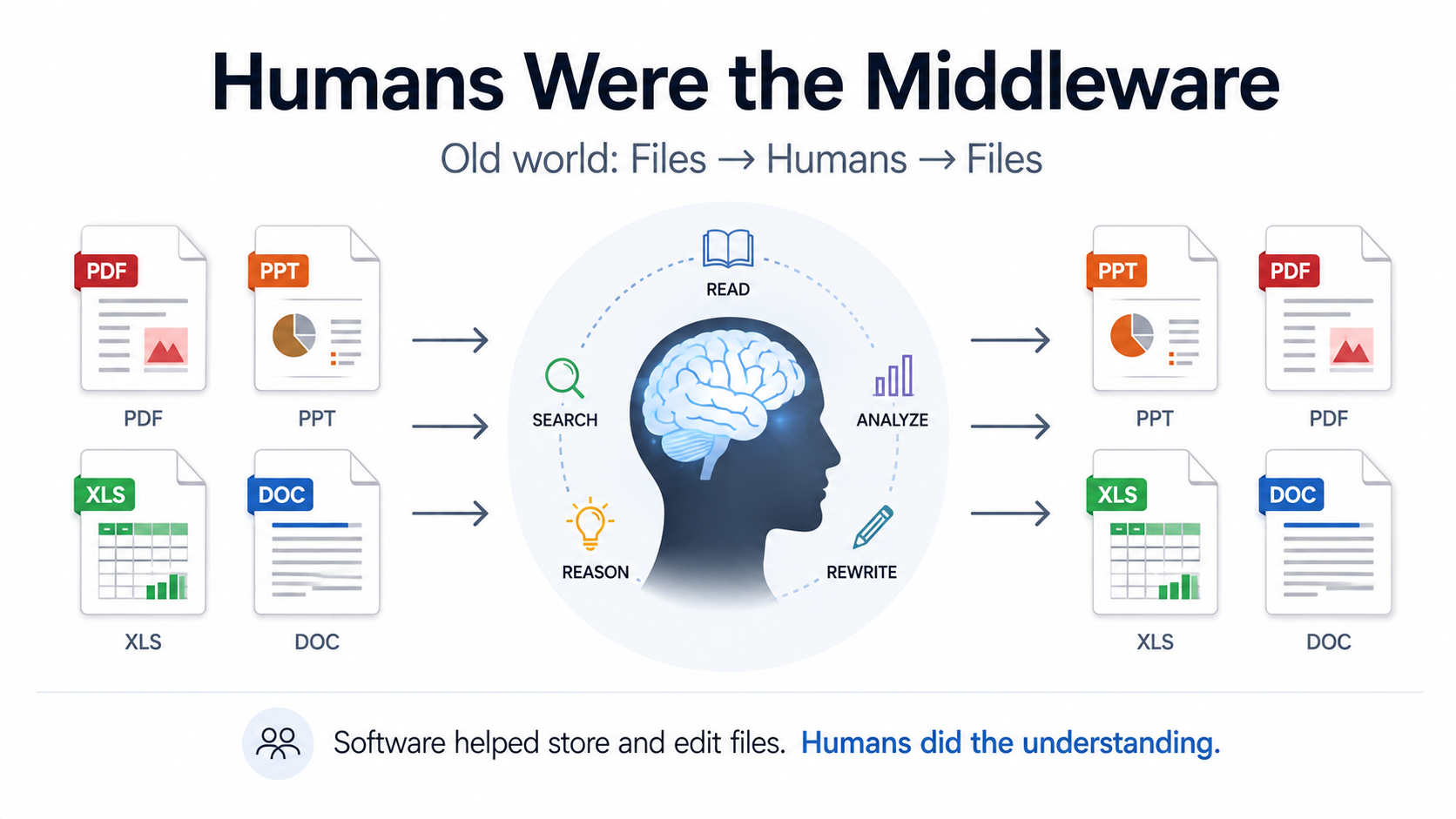
The future of due diligence isn't about replacing humans with AI. It's about giving deal teams superhuman capabilities — the ability to analyze thousands of documents in minutes, cross-reference findings instantly, and generate cited reports that can be verified in seconds. The human still drives the analysis, but AI eliminates the mechanical work that currently consumes 80% of the effort.
The best deal teams of the next decade won't be the biggest. They'll be the ones with the best tools. A three-person team with AI can outperform a twenty-person team without it.
At Ur AI, we built Specter because we saw this problem firsthand. We believe due diligence should be thorough, fast, and verifiable. That means every AI-generated insight must be traceable back to a specific passage in a specific document — full auditability, no guesswork, no black boxes.
The question isn't whether AI will transform due diligence. It's whether your team will be among the first to capture the advantage, or among the last to catch up.
Frequently Asked Questions
What are the main problems with traditional due diligence?
Traditional due diligence suffers from four key problems: inconsistency across analysts, citation gaps that make verification impossible, knowledge silos between team members, and fatigue-driven errors from reviewing thousands of documents manually. These issues lead to missed risks, delayed deals, and increased costs.
How long does due diligence typically take?
Traditional due diligence typically runs 3 to 12 months end-to-end, with data rooms demanding 190+ hours of analyst time and professional fees ranging from $100K to $2M+ per deal. With Specter, initial analysis can be completed in hours rather than weeks.
How can AI improve the due diligence process?
AI improves due diligence by automating the mechanical work — reading, summarizing, cross-referencing, and formatting — that consumes 80% of analyst time. AI can analyze thousands of documents in minutes, provide cited findings traceable to source documents, and enable human analysts to focus on judgment and strategic thinking.